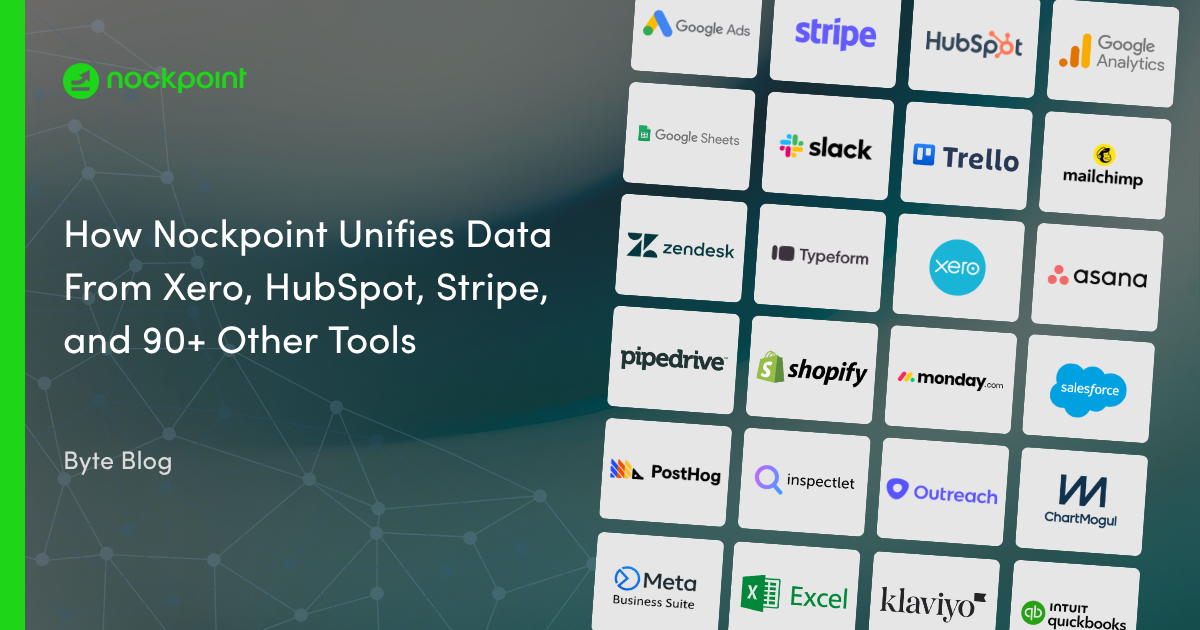
Connect Nockpoint to PagerDuty to unify your incident, on-call, and alerting data alongside the rest of your business metrics. Build dashboards that track incidents, response times, escalations, and service uptime in real time — no manual CSV exports or spreadsheet reconciliation required. Ideal for teams that want PagerDuty incident data sitting in the same view as their engineering, product, and operational data.
Nockpoint connects to PagerDuty using a secure API key. Once connected, PagerDuty incidents, services, escalations, and on-call data sync automatically into Nockpoint for reporting and visualization.
Yes. Nockpoint calculates incident volume, response times, escalations, and service uptime directly from your PagerDuty data, so you don't need to build spreadsheet formulas or manually pull incident logs.
Nockpoint keeps PagerDuty data up to date through scheduled syncs, so dashboards reflect current incident and on-call activity without manual refreshes.
Yes. Nockpoint lets you relate PagerDuty incident data to other connected sources — like engineering, product, or support platforms — to build a single source of truth across your business.
Yes. PagerDuty connections in Nockpoint use encrypted, credential-based authentication, and access can be scoped to read-only if you don't need write-back functionality.

-Logo.wine.png)